Basement water damage
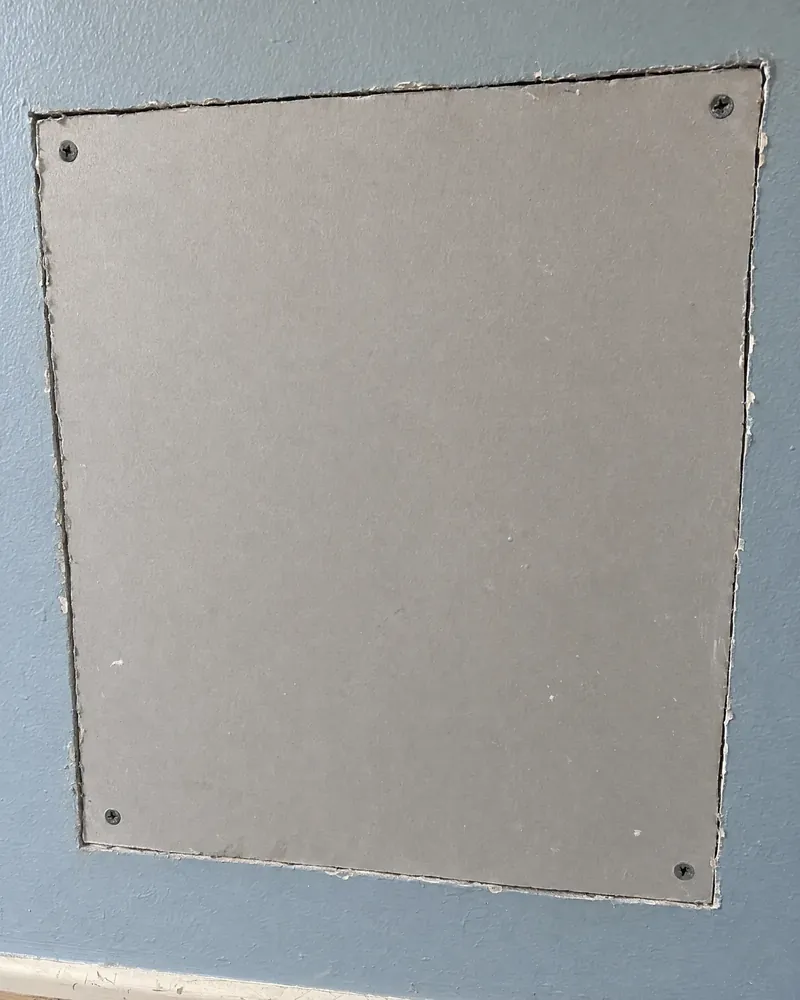
Damp, swollen or stained drywall low on a basement wall, removed up to dry gypsum and rebuilt after the seepage is under control.
(557) 222-1408Call 7 days, 7am–9pm
North St. Louis County
Water-ringed ceilings, cracked plaster, damp basement walls and doorknob holes, rebuilt flat and feathered into the old finish so the spot takes paint well and stops catching your eye.
Ring the number and the ball starts rolling: a drywall contractor who works around here returns your call, listens to what happened and lines up pricing.
Call 7 days, 7am–9pm
Once this arrives, your note goes to a drywall contractor in north county, who calls to talk it over and arrange pricing.
Around town
If your house seems to have a few stories written into its walls, that is normal here. The city's own history says the corn shocks gave way to houses during the 1950s, and Census figures agree: the Bureau tallies 4,821 dwellings in the city, and 2,730 of them went up in the 1950s, with 1,187 more in the 1960s. Half the homes were standing by 1958, the median build year.
Shared age is good news for anyone with a cracked or stained wall. Houses born in the same decade tend to share the same short list of complaints, and every item on it is solvable.
The city's history names it the largest subdivision in Bellefontaine Neighbors. Houses of this vintage may hold plaster over gypsum lath, early drywall, or both where a room was redone later, so step one on any crack or hole is finding out which material sits behind the paint.
Named for St. Cyr, which the city calls one of its more prominent streets. Mid-century hallways and bedrooms have often been painted many times over, and those thick old layers can lift at the edge of a patch unless they are scraped back and sealed before new compound goes on.
Old Bissell, New Bissell, Plat 14, Belcrest and Hathaway Hills complete the six building areas the history lists. Across all of them, EPA guidance treats houses built prior to 1978 as likelier candidates for lead-based paint, which changes how an old wall should be sanded.

Repairs
Most damage lands in one of these four. If yours straddles two, or you simply cannot tell, a photo settles it.
Damp, swollen or stained drywall low on a basement wall, removed up to dry gypsum and rebuilt after the seepage is under control.
Settling cracks, door-corner cracks and seam lines in plaster or early drywall, reinforced and refilled so they hold through the seasons far better than a dab of spackle.
Ringed, softened or drooping ceiling board after a roof or pipe leak, swapped out where it has to be and blended into the ceiling finish.
Doorknob holes, anchor holes, move-out damage and old cut-outs, patched flush so new paint covers them as evenly as the surrounding wall.
Your call
Plenty of wall damage really is minor, and there is nothing wrong with tackling it on a Saturday with a flexible blade and a small tub of spackling paste. This is roughly where the line falls.
Still unsure? Snap a photo and send it. We look over the picture and give you a plain answer on whether it is a do-it-yourself afternoon or work for a drywall contractor.
Money
An open-ended bill is a fair worry, so start with what published figures say. Bob Vila's article on drywall repair, citing Fixr, says a professional charges $75 or more for a small hole of up to 4 inches, and gives $200 to $550 as the spread for a cluster of holes and cracks within one room. Both are national numbers from a published guide rather than local prices; what counts is the quote from the contractor who prices your job.
The honest version
Sanding joint compound raises a talc-like haze that wanders into the next room. A careful repair uses plastic sheeting, floor covers and a vacuum-connected sander, though a little settling nearby is still normal. Worth raising with the contractor: how will they keep it contained?
No coat of compound can be covered until it has dried through. Quick-set powder compounds trim that wait, yet most repairs still need two or three coats, so plan on the job stretching past a single day.
A repaired patch is primed so paint grips it evenly. New paint dabbed over just the patch can differ slightly in sheen, which is why rolling the wall from one corner to the next blends best.
A well-finished patch blends away in everyday room light. Shine a flashlight sideways across the surface, though, and a determined eye can sometimes still trace it, and that is true of nearly every drywall repair.
Coverage
Older houses
Fewer than 250 houses in the city predate 1950, but most of the rest come from the two decades right after, and that era sits on a material fault line. Some houses got plaster over gypsum lath, some got early drywall, and plenty have both after decades of remodeling. One quick tell: unscrew a switch plate and study the cut edge. Plaster reads as a dense, stony layer, often gray underneath a white skim.
Settling cracks in these houses usually run from the upper corners of doors and windows, where the framing flexes most. In plaster, a crack can also mean the plaster has let go of its lath; pressing gently beside it and feeling for movement tells you a lot. Loose plaster gets re-anchored with plaster washers or adhesive before any filling, otherwise the line tends to reappear.
The EPA's lead guidance singles out pre-1978 construction as a likelier home for lead-based paint, and federal renovation rules reach contractors paid to work on painted surfaces in those houses. In practice that means no dry sanding of old paint without dust control. Asking about dust containment on an older wall is sensible, and a clear answer is a good sign.
Questions
Materials
Half-inch drywall is the usual match for walls in houses of this age, though plaster walls can be thicker and need shimming so a patch sits flush. Basement repairs often use moisture-resistant board, and ceilings sometimes call for a sag-resistant or thicker panel.
Powder compound you mix with water cures by chemistry rather than evaporation, so plaster work and deep fills start with it. Ready-mixed lightweight mud is softer to sand and suits the last thin coats.
Smooth walls are common in older homes and are the most demanding, because every ridge shows. Orange peel and knockdown are rebuilt by spraying or by roller; hand-troweled swirls on plaster ceilings are copied by hand on a scrap first, then on the ceiling.
Next step
Say what happened and which room it is in. We explain what the damage probably needs, a contractor from nearby sets the price up front, and the finished repair is left smooth and primed for whatever color you choose.
However you get in touch, a drywall contractor based close by follows up to discuss the work and settle on a figure.